Skip to content
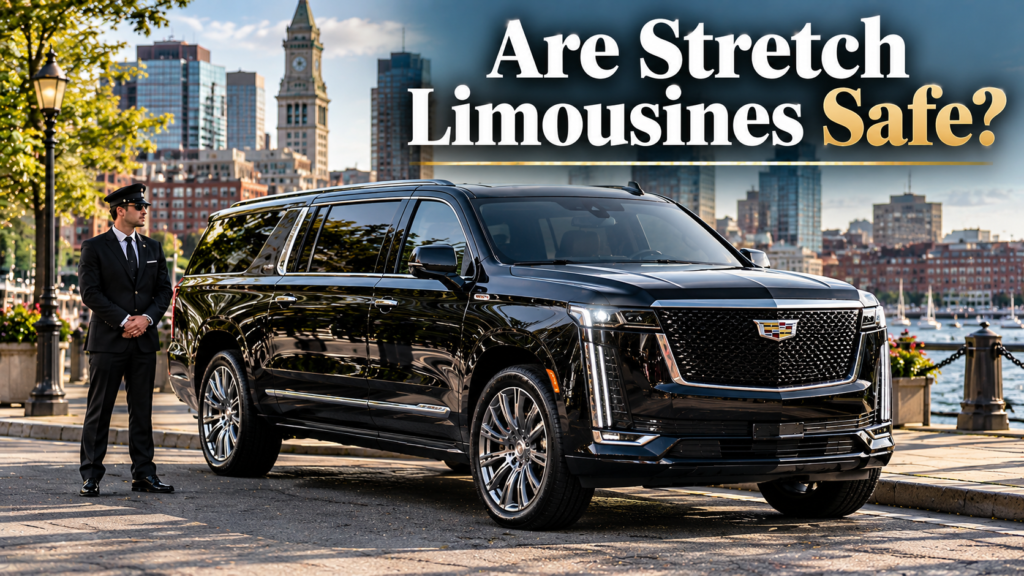
Stretch limousines can be a safe transportation option when the vehicle, operator, and chauffeur meet applicable safety requirements. But are stretch limousines safe in every situation? No vehicle should be considered automatically safe simply because it is professionally operated.
The more useful question is what you should check before booking. Vehicle condition, passenger capacity, seat belts, inspections, driver qualifications, maintenance, and the company’s operating practices all matter. The National Transportation Safety Board (NTSB) has also identified specific occupant-protection concerns involving some modified limousines, making it worth understanding what responsible passengers should look for.
Why Stretch Limo Safety Deserves A Closer Look
A stretch limousine begins as a vehicle that has been modified to create additional passenger space. That modification can change the vehicle’s weight, structure, seating arrangement, and applicable safety requirements.
The NTSB’s investigation of the October 2018 Schoharie, New York, stretch limousine crash highlighted concerns involving seat integrity, seat belts, vehicle condition, and regulatory oversight. The NTSB found that the limousine involved had been operating despite an out-of-service order and that brake failure contributed to the crash.
That investigation should not be interpreted as evidence that every stretch limousine is inherently unsafe. Instead, it demonstrates why passengers should pay attention to the operator, vehicle, maintenance program, and occupant-protection features before making a reservation.
What The NTSB Has Recommended
The NTSB issued recommendations following the Schoharie investigation that specifically addressed occupant protection in modified limousines.
One recommendation called for lap and shoulder belts at every passenger seating position in new vehicles modified for limousine use. Another addressed minimum performance standards for seating systems installed in newly modified limousines.
The NTSB also recommended stronger attention to the structural and mechanical inspection of altered vehicles and verification that modifications meet applicable federal safety standards.
These recommendations are particularly useful for passengers because they identify concrete areas to ask about. Rather than simply asking whether a limousine company is “safe,” ask how the company handles inspections, maintenance, seating capacity, seat belts, and chauffeur qualifications.
Stretch Limo Safety Features To Check
Safety equipment can vary by vehicle, age, configuration, and applicable requirements. Before booking, ask what safety features are actually available in the specific vehicle assigned to your trip.
Important questions include:
- Are seat belts available at the passenger seating positions?
- Are the belts accessible and functional?
- Does the vehicle have clearly accessible emergency exits?
- Is the vehicle maintained according to an established schedule?
- Are tires, brakes, lights, and other critical systems inspected regularly?
- Does the vehicle’s seating configuration match its permitted passenger capacity?
Do not assume that every feature is identical across every stretch limousine. If a particular safety feature is important to you, confirm it with the provider before booking.
Seat Belts Matter More Than Luxury Features
A limousine may have leather seating, entertainment systems, climate control, and other premium amenities. None of those features substitute for effective occupant protection.
The NTSB’s limousine recommendations specifically addressed lap and shoulder belts and the integrity of passenger seating systems.
Passengers should use available seat belts throughout the trip. This is especially important during sudden braking or a collision, when an unrestrained passenger can be thrown from their seating position or into another person.
If you are comparing two vehicles for a wedding, prom, corporate event, or night out, safety equipment should be part of the comparison rather than an afterthought.
Limousine Inspection Standards Matter
Regular inspection and maintenance are central to safe commercial transportation. A limousine operator should have a process for identifying mechanical problems before a vehicle is placed into passenger service.
The NTSB specifically recommended structural and mechanical safety inspections for altered vehicles following its investigation.
Passengers do not necessarily need to become mechanics to evaluate a vehicle. Instead, ask straightforward questions. How often are the vehicles inspected? How are maintenance problems documented? What happens when a vehicle develops a mechanical issue? Does the company have another vehicle available when the assigned limousine cannot safely operate?
Clear answers can tell you more than a generic statement that a fleet is “safe.”
Passenger Capacity Is A Safety Issue
Passenger capacity is not simply a question of comfort. A vehicle should be used within its applicable seating and operating limits.
When planning transportation for a group, give the company an accurate passenger count. Do not assume that adding one or two additional people will not matter.
A professional operator should help match the group with an appropriate vehicle. If your party has grown beyond the original reservation, ask whether a different vehicle is necessary rather than attempting to squeeze everyone into the original limousine.
This is particularly important for weddings, proms, bachelor and bachelorette events, corporate outings, and other occasions where passenger numbers can change at the last minute.
Chauffeur Training Is Part Of The Safety Picture
Even a well-maintained vehicle depends on responsible operation. The chauffeur’s driving habits, experience, knowledge of the vehicle, and response to changing road conditions all contribute to passenger safety.
When comparing providers, look for a company that uses properly licensed and professionally trained chauffeurs. Boston Logan Limo Service states that its chauffeurs are licensed, trained, and background checked.
Passengers can also ask whether chauffeurs receive training related to the vehicles they operate and whether the company reviews driving records and qualifications.
Is Renting A Limo Safe In Boston?
Is renting a limo safe in Boston? It can be, provided you select a properly operated service and an appropriate vehicle.
Massachusetts has regulations governing commercial motor-carrier safety, and state requirements can vary depending on the vehicle and type of operation.
That means passengers should avoid treating every limousine company as identical. When researching a safe limo service Boston travelers can trust, look at licensing, insurance, vehicle condition, driver qualifications, passenger capacity, and the company’s approach to maintenance.
A professional company should be comfortable answering reasonable safety questions before you reserve.
What To Ask A Limo Company Before Booking
You do not need a complicated checklist. A few direct questions can help you evaluate a provider:
- Is the vehicle properly licensed and insured for passenger transportation?
- How is the limousine inspected and maintained?
- How many passengers is the specific vehicle designed or permitted to carry?
- Are seat belts available and accessible?
- Are chauffeurs properly licensed and trained?
- What happens if the assigned vehicle develops a mechanical problem?
- Can you confirm the exact vehicle being reserved?
A company that provides clear answers is easier to evaluate than one that relies only on general statements about luxury or comfort.
Safety Considerations For Back Bay And Cambridge
Boston driving presents its own challenges. Congested streets, construction, narrow roads, pedestrians, bicycles, winter weather, and event traffic can all affect a trip.
For passengers looking for a licensed limo company Back Bay travelers can rely on, the provider’s local driving experience is worth considering. Chauffeurs who regularly operate throughout central Boston should understand the area’s traffic patterns, pickup restrictions, event congestion, and changing road conditions.
The same applies when researching Cambridge limousine safety standards. A professional service should plan for the actual operating environment rather than treating every trip as a simple point-to-point journey.
Weather Can Change The Safety Equation
Boston weather can change quickly, particularly during winter. Snow, ice, heavy rain, reduced visibility, and slippery roads can affect travel times and driving conditions.
A responsible chauffeur should adjust speed and following distance to the conditions rather than treating the scheduled arrival time as more important than safe operation.
Passengers should also understand that a safe trip may take longer during difficult weather. If conditions become severe, a transportation provider may need to modify routing or discuss whether a trip should be delayed.
What Passengers Can Do To Stay Safe
Passengers also have a role in limousine safety. Simple habits can reduce unnecessary risk during a trip.
Wear an available seat belt. Remain seated when the vehicle is moving. Do not interfere with the chauffeur’s operation of the vehicle. Keep aisles and emergency exits clear when applicable, and follow the chauffeur’s instructions if an unusual situation occurs.
Most importantly, respect the vehicle’s passenger capacity. A larger group should be assigned a larger appropriate vehicle rather than exceeding the capacity of a smaller limousine.
Are Stretch Limousines Safe For Weddings And Events?
Stretch limousines can be appropriate for weddings, proms, birthdays, corporate events, and other special occasions when the vehicle and operator are properly selected.
For event transportation, planning ahead makes safety easier. Confirm the passenger count, vehicle type, pickup locations, timing, and any special requirements before the event.
You should also confirm that the company will provide the vehicle you actually reserved. This matters because different limousine models can have different seating configurations and safety equipment.
What Makes A Limo Company Worth Considering?
Safety should be evaluated alongside professionalism and reliability. A provider should have appropriate commercial insurance, qualified chauffeurs, properly maintained vehicles, and procedures for handling unexpected problems.
Boston Logan Limo Service describes its fleet as including sedans, SUVs, stretch limousines, and other passenger vehicles, while its service information states that its chauffeurs are licensed and professionally trained.
For passengers arranging transportation in Boston, that provides a starting point for evaluating a provider. You can then ask specific questions about the vehicle assigned to your trip rather than relying solely on general company descriptions.
FAQs About Are Stretch Limousines Safe
Are Stretch Limousines Safe?
Stretch limousines can be safe when operated by a properly licensed and responsible provider using an appropriate, maintained vehicle. The NTSB has identified specific occupant-protection concerns involving some modified limousines, so passengers should ask about seat belts, seating systems, inspections, and vehicle condition before booking.
What Are The Most Important Stretch Limo Safety Features?
Accessible and functional seat belts, appropriate seating systems, emergency exits, properly maintained brakes and tires, and other required safety equipment are important considerations. Features can vary by vehicle, so confirm the specific limousine being assigned to your trip.
Is Renting A Limo Safe For A Large Group?
It can be, provided the vehicle is appropriate for the number of passengers. Never exceed the vehicle’s applicable passenger capacity. If your group is too large, ask the provider about a larger vehicle or multiple vehicles.
Are Seat Belts Required In Stretch Limousines?
Requirements can depend on the vehicle, its configuration, and applicable federal and state rules. The NTSB has specifically recommended lap and shoulder belts at every passenger seating position in new limousine conversions.
How Do I Choose A Safe Limo Service In Boston?
Check the company’s licensing, insurance, chauffeur qualifications, vehicle maintenance practices, passenger capacity, and inspection procedures. Ask specific questions before booking and confirm the vehicle that will be used for your trip.
Book A Boston Limo With Safety In Mind
Choosing a limousine should involve more than comparing appearance, amenities, and price. Ask practical questions about the vehicle, chauffeur, maintenance, capacity, and occupant protection before making your reservation.
For travelers searching for a safe limo service Boston passengers can evaluate with confidence, Boston Logan Limo Service provides chauffeured transportation throughout Boston and surrounding communities, including airport transfers, corporate transportation, weddings, and special events. You can review the company’s Boston Limousine Service options or contact the team with questions about vehicles and booking.
If you are traveling to or from Logan Airport, you can also review the Boston Limo Airport Car Service options before reserving your ride.